I had the pleasure of speaking at the Artemis Fund's Hunters Summit recently alongside some sharp founders, operators, and investors. What struck me was how critical it is for early-stage founders to land investors and advisors with experience building technology companies, and the humility that comes from having been the challenger yourself. This cannot just be pattern recognition in theory, but real, recent experience.
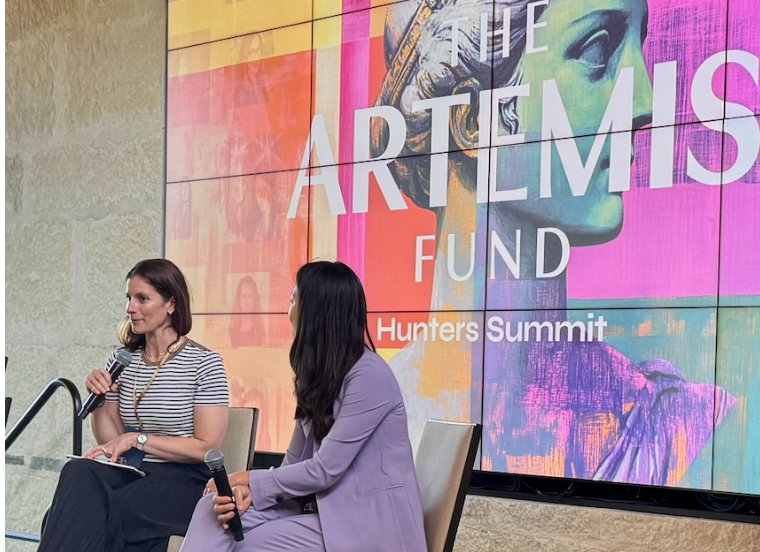
My conversations focused on go-to-market (GTM). Here's what stuck with me.
On selling: it's closer to therapy than most people admit
If you've worked with me in any capacity, you've heard me say this.
The best sales conversations I've had didn't start with a pitch. They started with genuine curiosity about the person across the table. What motivates them? How do they see the world? And yes, what will help them get promoted? When you understand what someone is actually optimizing for, you stop selling and start solving.
Be selective about your early customers and partners. They are not just sources of revenue. They are the brands you become associated with, the voices that shape your roadmap, and the references that open or close the next door. And ask yourself: are there any receipts in the ether suggesting this customer or partner will be a good early user? If the answer is no, think long and hard about how much sweat equity you put into this one.
Authenticity is not a soft skill. Some of the most complex deals I’ve led — with Shopify, Wayfair, Salesforce, eBay, and others — were closed because our team was transparent early on. We were clear about what we could deliver, what we'd try to deliver, and what wouldn't happen. Sometimes that was a shared roadmap. Sometimes it was a 1:1 call where I said, ‘I know you care about this, and I do too, but it won't be part of our partnership. How else can I help you get there?’ That honesty is rare, and frankly, sometimes it isn't popular at the moment. It's also how you get a brand their boss hasn't yet heard of in front of the C-suite because they're willing to bet their bonus on it.
On investors: look for someone who's been the challenger too
Choosing an investor is a lot like the early partnership decisions I've made. The question was never just ’how big are they today?’ It was, ‘who will grow with us, who has skin in the game, and who will still be leaning in when things get hard?’ Of course, receipts matter here too. Track records matter, not just publicly, but privately. My husband always says it's who you are when nobody is looking that makes you a winner; pretty applicable here and always.
When I joined Stripe, we were the challengers. When I was advising Anthropic in the early days, we were too, wild as that is to say now. Knowing how to open doors, earn trust, and get a seat at the table, even to be considered for the deal, is learned behavior. Find investors who want to share their learnings — and yes, blooper reels available on request too.
On advisors: disqualify fast, open doors, don't automate too early
The best early GTM advisors aren't there to validate your strategy. They're there to disqualify it fast. One of my co-panelists spent a year chasing produce companies after landing one great customer in that space. He thought he'd found a market signal. He hadn't. He'd found an innovative person at an innovative company. Knowing how to distinguish the difference is everything when time is short and resources are scarce.
A strong GTM advisor can also open doors to your ideal customer profile (ICP), role-play your pitch before you burn a real meeting, and pressure-test your pipeline before you present it to your board.
Two things we kept coming back to: First, pricing has to be simple enough to fit on a corporate card. If it requires a lengthy procurement review before someone can even try the product, you've already lost. Second, know your buying committee cold. Who is an advocate versus an approver? Ask the hard questions early. The worst outcome is hitting a wall in week eight that you could have seen in week two. Early sales teams are often afraid to ask — don't be. Be afraid of not asking.
On AI: it's a genuine accelerant
But only once you know what good looks like. I've seen it 10x efficiency in full-funnel sprints at a Series A company, but only after the ICP was clear and the buyer map was built. Pre-seed and seed founders who automate before they can evaluate never get close enough to the customer and sales motion to learn from it.
One last thing: have fun
This work is serious, and the stakes are real. But some of my best memories from 15 years in GTM are from moments when a room full of people who cared deeply about the same problem just let themselves enjoy it. Frankly, that's when the really novel ideas come to the forefront. The founders who sustain long enough to win tend to genuinely love the space, the customer, and their people — and you feel that in the long run.
Thanks to the Artemis Fund team for a great convening. There was so much good energy in that room, and yes, even on that boat!